概要
ETL(extract, transform, load の略)は、複数のソースシステムからデータをデータウェアハウスやその他のターゲットシステムに移し、クリーニング、標準化、分析準備を行うデータ統合プロセスです。企業がクラウド分析、AIワークロード、リアルタイムレポートを拡大する中で、適切に設計されたETLプロセスは、パイプラインのあらゆる段階で正確で管理されたデータを提供する基盤として機能しています。ETLの完全な定義、ETLプロセスのステップバイステップ、ETLとELTの比較、一般的なユースケースと例、そして組織に最適なETLツールの選び方について、ぜひお読みください。
- 内容: ETL(抽出、変換、ロード)は、複数のソースシステムからデータをデータウェアハウスやターゲットシステムに移し、分析のために行うデータ統合プロセスです。
- 仕組み: 3段階で、ソースから生データを抽出し、一貫したフォーマットに変換し、宛先にロードします。
- 使用時期: ガバナンス型、コンプライアンス依存型、またはオンプレミスのワークロードで、データの品質管理が取り込み速度よりも重要です。
- ETLとELT: ETLは読み込み前に変換します。ELTはまず生データを読み込み、クラウドウェアハウス内で変換します。ほとんどの企業は両方のパターンを並行して運用しています。
ETLとは何の略ですか?
ETLはextract(抽出)、transform(変換)、load(負荷)の略です。これは複数のソースからデータを単一の目的地(通常はデータウェアハウス、データレイク、クラウド分析プラットフォーム)に統合し、報告、ビジネスインテリジェンス、分析のために準備するためのデータ統合プロセスです。
この用語は1970年代にさかのぼり、企業が初めて異なる取引システムからデータを中央の分析リポジトリに統合する標準化された方法を必要とした時代に由来します。ツールやターゲットシステムはそれ以来劇的に進化しましたが、コアコンセプトである抽出、変換、ロードは今日の組織のデータ移動の中心的なものであり続けています。
データウェアハウジングにおけるETLとは何ですか?
ETL(抽出、変換、ロード)とは、データウェアハウジングにおいて、データレイクなどのソースシステムから非構造化データを同時に読み取るまたは抽出し、データをクエリや分析に適した形式に変換(または変換)し、オンサイトのデータウェアハウス、クラウドデータウェアハウス、運用データストアにロードするプロセスを指します。 あるいはデータマート。ETLシステムは一般的に、複数のアプリケーションやシステムからデータを統合し、それぞれ別のハードウェア上でホストされ、異なるグループやユーザーによって管理されることがあります。ETLは、アドホックレポート用の一時的なデータのサブセットを組み立てたり、新しいデータベースへのデータ移行、またはデータベースを新しい形式やタイプに変換したりするために一般的に用いられます。
ETLは複数のデータソースから生データを収集し、分析ニーズに集中管理できるため、データウェアハウジングにとって重要です。これにより、単一のデータソースから質問できるため、より速くクエリを行えます。
ETLの手続きはどのように進めますか?
ETLツールは、1つまたは複数のソースからデータを1つの中央コンテナに自動的に統合します。このプロセスは3つのステップから成り立っています。
抽出:ソースシステムからデータを取得
抽出フェーズでは、エンタープライズアプリケーションやリレーショナルデータベースからフラットファイル、API、IoTに接続されたデバイスなど、複数のソースシステムから生データを取得します。データエンジニアはETLツールを設定し、各ソースに接続し、どのレコードを抽出するかを特定し、生産システムに影響を与えずに処理できるステージングエリアにコピーします。ソースシステムは異なるフォーマット、スキーマ、更新頻度を多く使用するため、信頼性の高い抽出はパイプライン全体の成功の基盤となります。
Transform:データのクリーニングと標準化
変換フェーズでは、生データをクエリや解析に適した統一フォーマットに変換します。これには、不完全または重複したレコードのフィルタリング、ビジネスルールの適用、日付、通貨、単位などのフォーマットの標準化、複数のソースからのデータの統合、報告用のレコードの集約などが含まれます。変換はしばしばデータを構造化クエリ言語(SQL)に適したテーブルに変換しますが、現代のETLツールはJSONのような半構造化フォーマットも扱います。適切に設計された変革ステップにより、下流の消費者は一貫性のある信頼できるデータに基づいて対応できます。
ロード:ターゲットシステムへのデータ移動
ロードフェーズでは、変換されたデータをターゲットシステム(通常はデータウェアハウス、データレイク、データマート、運用データストア)に書き込みます。ロードはスケジュールバッチで行われる場合(例えば、前日の売上データで倉庫を更新する夜のジョブ)またはストリーミングパイプラインを通じてほぼリアルタイムで行われます。ターゲットシステムは、分析、ダッシュボード、機械学習モデル、そして統合されたエンタープライズデータに依存するその他の下流アプリケーションの唯一の真実の源となります。
ETLツールの種類
ETLツールやETLソフトウェアには、異なるアーキテクチャや運用要件に適したいくつかの形態があります。最適な選択は、データがどこにあるか、どれだけ早く分析に提供したいか、そしてワークロードが構造化されて予測可能か、変動的でリアルタイムなのかによります。
オンプレミスETLツール
オンプレミスツールは、すべてのデータが現地に保存されているため、より高いセキュリティを可能にします。データは環境から離れないため、より厳格なコンプライアンス管理を提供し、金融サービス、医療、政府など厳しい規制要件を持つ業界で一般的な選択肢となっています。
クラウドベースのETLツール
クラウドソフトウェアは、クラウドベースのデータウェアハウスやアプリケーションに対応するETLプロセス向けに特別に設計されています。これらのツールは、コンピュートやストレージをオンデマンドでスケールし、最新のSaaSソースとネイティブに統合し、インフラのオーバーヘッドを削減するため、Snowflake、Amazon Redshift、Google BigQuery、Microsoft Azureなどのプラットフォーム上で分析を行う組織に適しています。
バッチETLツール
バッチソフトウェアはETLプロセスをバッチ単位で行うため、定期的な分析や給与情報などの構造化データの報告に適しています。バッチジョブは通常、夜ごとや毎時間のようにスケジュールで実行され、蓄積されたデータを大量に処理します。月次財務報告や日末売上総額など、予測可能な作業負荷に適しています。
リアルタイムおよびストリーミングETLツール
リアルタイムETLツールは、データパイプライン内の情報収集と分析にかかる時間を最小限に抑えます。イベントが発生するたびにデータを継続的に処理するため、不正検出、IoT監視、推薦エンジン、そして最新のインサイトに依存するあらゆる用途において不可欠です。
ETLの利点
ETLは、ビジネス全体のデータを統合・分析する必要がある組織にとって、いくつかの重要な利点を提供します。
エンタープライズデータの統一ビュー
複数のソースシステムからデータを単一のターゲットに統合することで、ETLはアナリスト、経営幹部、ビジネスユーザーにオペレーション、顧客、パフォーマンスの統一されたビューを提供します。定義が一貫していないサイロ化されたツールからレポートを引き出すのではなく、チームは単一の調整された真実の情報源に問い合わせることで、ビジネスの異なる部門で矛盾する数字が発生するリスクを減らします。
データの品質と一貫性の向上
ETLを適切に活用することで、データは統一された形式で存在し、企業のデータパイプラインや全体のアーキテクチャを通じて追跡しやすくなります。トランスフォーメーションフェーズでは、エラーの検出、重複の除去、一貫したフォーマットの強制により、データが下流システムに到達する前にクレンジング、検証、標準化ルールが適用されます。つまり、アナリストやアプリケーションは信頼できる記録から作業します。
ビジネスインテリジェンスと分析をサポートします
ビジネスインテリジェンスとは、データマイニング、プロセス分析、パフォーマンスベンチマーク、記述的分析を含む広範な用語です。ETLがなければ、企業はBIのためのデータをまとめ分析するのが非常に困難になるでしょう。ETLは企業が複雑な問い合わせを行い、迅速な回答を得ることでより良い意思決定が可能になります。
クラウド移行と近代化の加速
ETLプロセスにより、多様な異なるソースからデータを取得し、中央集権型のデータウェアハウスや分析プラットフォームに転送できます。ETLツールがなければ、特に多様なデータソースやタイプを扱う場合、非常に困難で時間がかかることがあります。
自動化により手作業の負担を軽減します
自動化ツールにより、常に監視されずにETLを実行できるようになります。これは特に、毎日大量のデータを処理するエンタープライズ規模の企業に当てはまります。自動化されたETLツールは、データチームを人為的ミスに伴うリスクから守ります。
ETLの課題
その価値にもかかわらず、ETLにはいくつかの重要な課題も伴います。
- スケーラビリティの欠如。ETLは、あまり変わらない予測可能なデータソースに依存して機能します。IT環境を変えるなら、ETLのテストプロセスも調整して対応させる必要があります。
- 品質の検証やプロセス開始前に検証されなければ、変換は誤ったまたは不正確なデータにつながります。ETLツールは複雑で、適切に機能するために多くの専門知識が必要です。適切なテスト、クレンジング、探索がなければ、誤りがデータに入り込む可能性があります。
- ETLについての意見が分 かれています。データ分析とデータエンジニアリングは、すべてのデータチームにとって不可欠ですが、それぞれ異なる目的を持っています。データサイエンティストは、データサイエンスの領域で機械学習(ML)などのツールを用いてデータ分析を行います。データエンジニアは生データを使い、意思決定に役立つ情報に変換します。
ETLとELT:違いは何ですか?
抽出、ロード、変換(ELT)はETLパイプラインのバリエーションであり、クラウドベースの環境でよく用いられます。データを読み込む前に変換するのではなく、ELTは生データをデータウェアハウスやデータレイクに取り込み保存し、必要に応じて分析のために変換します。
変換は読み込み後に行われるため、ELTは特に大規模データ処理やオンデマンド計算をサポートするクラウドネイティブアーキテクチャにおいて、速度と柔軟性を向上させることができます。
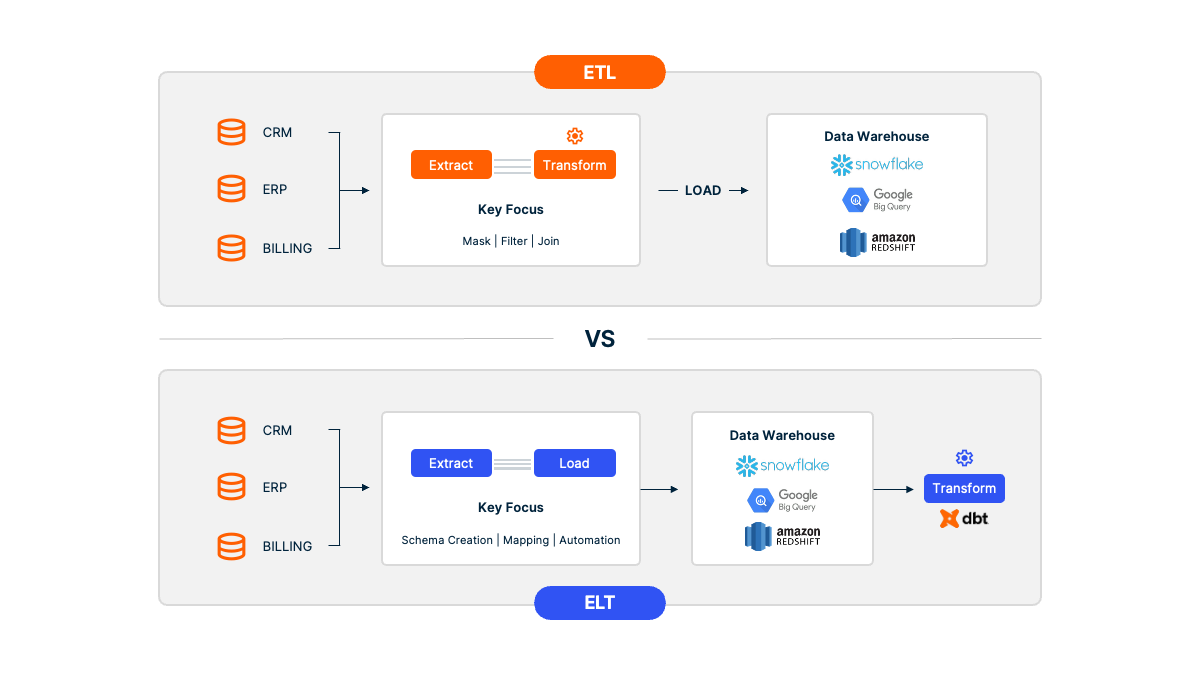
出典:https://www.striim.com/blog/etl-vs-elt-differences/
ETLとELTは似た手順を踏みますが、データの変換方法や時期、計算の実施場所、そしてそれぞれに最適なワークロードにおいて異なります。以下の表は、処理、アーキテクチャ、コスト、ガバナンス、一般的なユースケースにおけるETLとELTの主な違いをまとめています。
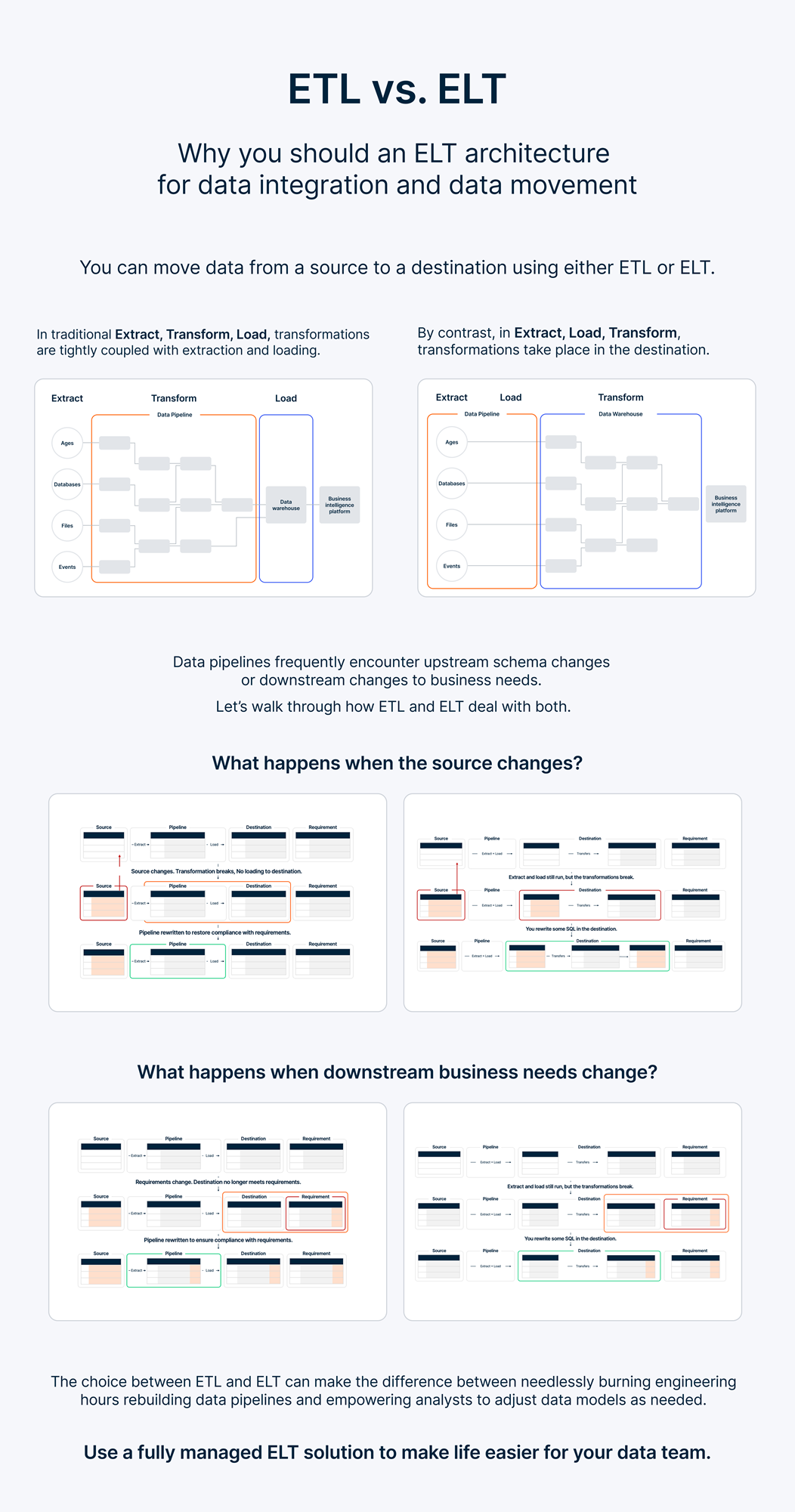
出典:https://www.linkedin.com/posts/salim-raj-kapoor-184b8b255_100daysofdataengineering-dataengineering-activity-7426818388519370752-FPMj/
一般的に、ETLは構造化された管理された環境に好まれ、一方でELTはスケーラブルでクラウドベースの分析により適しています。
ETLを使うタイミング
ワークロードが厳格なガバナンス、予測可能なパフォーマンス、明確に定義されたビジネスルールをウェアハウスに届ける前に適用する必要がある場合、ETLを選択してください。ETLは、金融サービス、医療、政府などの規制業界に強く適合しており、コンプライアンス要件により機密データの検証と標準化が管理されたステージング環境で行われ、その後に読み込みが求められます。また、主にオンプレミスデータウェアハウスを運用する組織、安定したレポーティング要件を持つ組織、あるいはワークロードの分離やコスト予測を生の取り込み速度よりも優先するチームにも適しています。
ELTを使うタイミング
データ量が大きく、ソースが多様で、ターゲットシステムが最新のクラウドデータウェアハウスやエラスティックな計算能力を持つデータレイクであれば、ELTを選びましょう。ELTは柔軟性が重要なワークロードに適合します。例えば、生データを再処理のためにアクセスしておくことで恩恵を受けるデータサイエンスや機械学習パイプライン、あるいは倉庫内でSQLの変換を反復したい分析チームなどです。ELTはクラウドネイティブスタックの標準化にも適しています。
一般的なETLのユースケースと例
ETLは幅広いエンタープライズデータワークロードをサポートしています。以下は、今日の組織がETLに頼っている最も一般的なユースケースの4つです。
データウェアハウス統合と統合
最も確立されたETLのユースケースは、エンタープライズデータウェアハウスの構築と維持です。組織はCRM、ERP、財務、マーケティング、オペレーションシステムからデータを抽出し、一貫した形式に変換して中央倉庫にロードし、集合分析できるようにします。この統合されたビューは、分散したソースシステムでは不可能なエグゼクティブダッシュボード、財務統合、部門横断報告の基盤となっています。
クラウド移行とハイブリッドアーキテクチャ
ETLは、レガシーなオンプレミスシステムから最新のクラウドプラットフォームへデータを移行する上で重要な役割を果たします。クラウド移行の際、ETLパイプラインは老朽化したデータベースからデータを抽出し、新しいターゲットスキーマに合わせて変換し、クラウドウェアハウスやデータレイクにロードします。これは多くの場合、段階的に行われ、レガシーシステムとクラウドシステムを並行して稼働させます。ETLは、コンプライアンスやレイテンシの理由で一部のデータがオンプレミスに残り、他のワークロードがクラウド上で動作する継続的なハイブリッドアーキテクチャにおいても不可欠です。
ビジネスインテリジェンスと報告
ETLパイプラインは、BIツール、セルフサービス分析プラットフォーム、エグゼクティブレポートを支えるクリーンで標準化されたデータを供給しています。財務チームは、月次クロージングや予算編成にETLが作成したデータを使用します。営業・マーケティングチームはパイプライン分析やキャンペーン帰属に利用しています。オペレーションチームはKPIダッシュボードに使っています。ETLがなければ、各チームは独自の抽出と清掃ロジックを実行しなければならず、数値の不一致や無駄な労力、そして真実の矛盾を招きます。
機械学習とAIデータパイプライン
現代のETLは機械学習やAIワークロードのサポートがますます進んでいます。MLモデルは一貫性があり適切に管理されたトレーニングデータに依存しており、ETLパイプラインはそのデータが準備される方法です。つまり、運用システムから抽出され、クリーンアップ・標準化され、特徴ストアやモデルトレーニング環境に読み込まれます。企業が生成AIや予測分析のユースケースを構築する中で、信頼性の高いETLこそが、モデルが即席の抽出ではなく信頼できる系譜追跡データ上で訓練されることを保証します。
適切なETLツールの選び方
ETLツールを選ぶ際には、いくつかの要素を考慮する必要があります。ETLツールには以下のような機能があるはずです:
- 包括的な監視機能。 ETLタスクの進捗を詳細に示すことは、最大限の透明性を得るために不可欠です。
- 効果的なエラー処理。 もし何か問題が起きた場合、ETLツールがその理由を説明できるはずです。さらに、データ損失に対する予防策も備えるべきです。
- スケーラビリティ。 ビジネスの成長を期待するなら、ツールも一緒に成長できるはずです。増え続けるデータを処理できないETLツールは長くは役に立ちません。
- 使いやすいインターフェース。 市場で最も高度なETLツールでも、UIが意味不明ならほとんど役に立ちません。データ統合ツールはバグがなく、信頼性が高く、設定も簡単なものであるべきです。
- さまざまなデータソースとの互換性。 データウェアハウスやデータベースなど、幅広いコンテナからデータを収集する必要がある場合、ツールはそれらすべてを問題なく扱えるはずです。また、さまざまなクラウドサービスとシームレスに連携できる必要があります。
ETLには特定の用途がありますが、一般的にビッグデータ単独では適していません。むしろ、現在のデータトレンドや絶えず変化するプロセスを考慮したより大きな戦略の一部であるべきです。
よくある質問
まだETLについて質問がありますか?ここでは、よくある質問への回答をいくつかご紹介します。
ETLは現代のデータアーキテクチャでもまだ重要でしょうか?
ETLは現代のデータアーキテクチャでもまだ重要でしょうか?
はい、ETLは現代のデータ業務において依然として中心的な役割を果たしていますが、その役割は進化してきました。ELTはクラウドネイティブの分析やデータサイエンスのワークロードのデフォルトパターンとなっていますが、ETLは依然として規制され、ガバナンスされたオンプレミスのワークロードにおいて、データ品質の強力な管理が求められる場合に適しています。多くの企業は両方のパターンを並行して運用しており、繊細な財務やコンプライアンスに重要なパイプラインにはETLを、大量で柔軟な分析やAIのユースケースにはELTを活用しています。
ETLパイプラインとは何ですか?
ETLパイプラインとは何ですか?
ETLパイプラインとは、ソースシステムから抽出、変換、ロードの段階を経てデータをターゲットシステムへと移動させる接続されたプロセスとツールの集合体です。単一のETLパイプラインは特定のデータフローを処理することがあり、例えばPOSシステムから日々の販売記録を取得し、それをクリーニングし、販売報告倉庫に読み込むことなどです。一方、大規模な企業は通常、異なるデータドメインにわたって数十から数百のパイプラインを運用します。
ETLはデータ統合とどう違うのですか?
ETLはデータ統合とどう違うのですか?
データ統合はより広いカテゴリーで、複数のソースからデータを統合して統一されたビューにまとめるプロセスを指します。ETLは、データ統合の一つの特定のアプローチであり、抽出、変換、ロードの三段階のシーケンスが特徴です。その他のデータ統合アプローチには、ELT、データ仮想化、変更データキャプチャ(CDC)、データレプリケーションなどがあります。ETLはこれらの中で最も確立されており、変換・キュレーションされたデータを対象とするバッチ指向の分析ワークロードに特に適しています。
ETL開発者は何をするのですか?
ETL開発者は何をするのですか?
ETL開発者は、ソースシステムからターゲットシステムへデータを移動させるパイプラインを設計、構築、保守します。この役割は抽出ロジックの作成、変換ルールの定義、パフォーマンス最適化、パイプラインの健康状態の監視、故障のトラブルシューティングを含みます。ETL開発者は通常、Informatica、Talend、SSIS、dbt、クラウドネイティブサービスなどのツールを使い、データエンジニア、データアナリスト、ビジネス関係者と密接に連携してパイプラインが正確なデータを予定通りに届けるようにしています。