概要
AIデータパイプラインは、構造化および非構造化データを取り込み、準備し、提供して人工知能や機械学習モデルの訓練、グラウンディング、運用を行う自動化システムです。ダッシュボードやレポート用に構築された従来のデータパイプラインとは異なり、AIデータパイプラインはマルチモーダルデータ、より厳格な系譜要件、そして現代のAIワークロードが要求する継続的な再学習サイクルに対応して設計されています。
よく設計されたAIデータパイプラインは、取り込み、準備、トレーニングまたはインデックス作成、デプロイ、監視という5つの明確な段階を経てデータを処理し、それぞれがモデルの正確性、管理、本番対応を維持するために設計されています。
AIデータパイプラインとは何ですか?
AIデータパイプラインとは、データをソースシステムから人工知能や機械学習モデルが利用できる形へと移行する自動化されたインフラです。生データを取り込み、クリーニング・変換し、適切なタイミングで適切な形式で依存するモデルに提供する責任を負っています。本番環境では、データが届けられた後もパイプラインは停止しません。モデルの挙動を監視し、ドリフトを検出し、新しいデータをトレーニングに再ルーティングし、データプラットフォームとサポートするAIアプリケーション間のループを閉じます。
エンタープライズAIの台頭により、パイプラインが期待される役割は変わりました。従来のデータパイプラインは、構造化データの行をウェアハウスに移して分析することに最適化されています。AIデータパイプラインは、より広範なものに最適化されています。ドキュメント、画像、音声、ストリーミングテレメトリなどの非構造化ソースを対応し、検索拡張生成(RAG)用の埋め込みを生成する必要があります。特定のモデルトレーニングランを再現できるほどの系譜を追跡し、推論ワークロードが依存する新鮮さを維持すること。これらの要件こそが、現代のAIパイプラインを従来のものと区別する点であり、多くの企業が既存のデータパイプラインをAIをサポートするために置き換えるのではなく拡張する必要がある理由です。
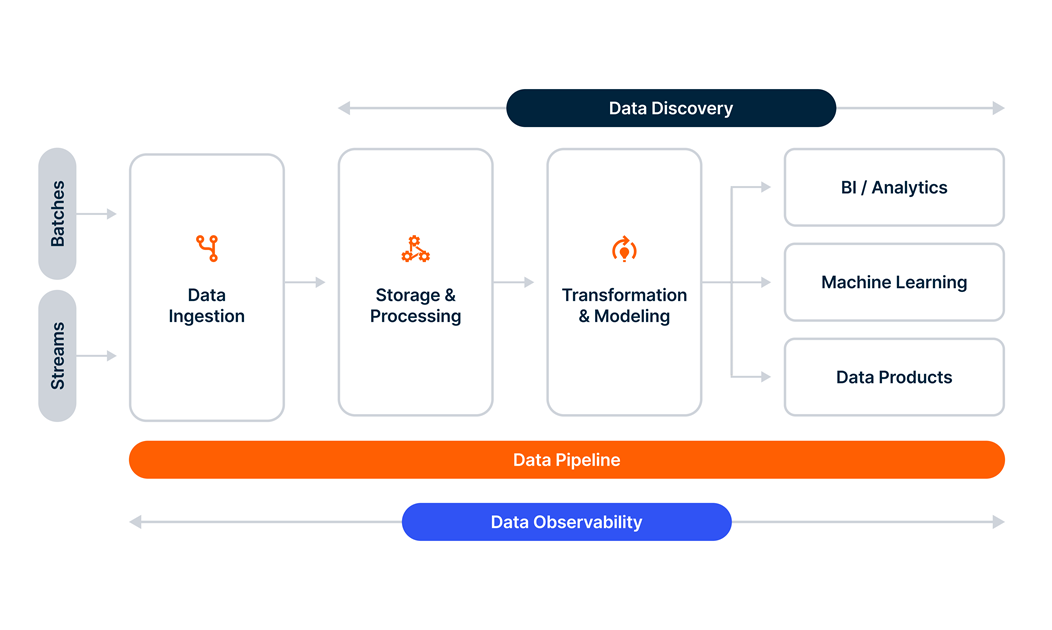 出典:https://www.montecarlodata.com/blog-data-pipeline-architecture-explained
AIパイプライン vs. ML パイプライン vs データパイプライン
データパイプライン、MLパイプライン、AIデータパイプラインという用語はしばしば同義で使われますが、それぞれ異なる作業範囲を表しています。データパイプラインは親カテゴリであり、データをソースから目的地へ移動する自動化されたフローを指します。MLパイプラインはより狭義の概念で、通常はトレーニングデータをデプロイされた機械学習モデルに変換する一連のステップ、すなわち特徴エンジニアリング、トレーニング、検証、デプロイを指します。
AIデータパイプラインはどちらよりも広範です。生のソースデータから本番のAIアプリケーションまでの全経路を含み、MLパイプラインもその一段階として含まれます。AIデータパイプラインは従来の機械学習を超え、RAGのベクトルストアにパイプラインを供給する生成AIワークロードにも拡張されています。このように扱うと、AIデータパイプラインはエンタープライズデータプラットフォームとそれの上に構築されたすべてのAIアプリケーションをつなぐ組織となります。
AIデータパイプラインの5つの段階
ほとんどのAIデータパイプラインは、どのプラットフォームで動作するか、どのモデルであれ、同じ5つの段階を経ます。正確な名称はベンダーやフレームワークによって異なりますが、各段階で行われる作業は一貫しています。データは取り込み、準備され、モデルの訓練や基盤化に使われ、アプリケーションに展開され、その後監視されてサイクルが継続されます。
ステージ1:データ取り込み
インジェスションとは、パイプラインがソースシステムから生データを収集するポイントです。AIワークロードにおいて、これらのソースは非常に多様です。トランザクションデータベース、イベントストリーム、IoTテレメトリ、ドキュメントリポジトリ、画像、ログ、サードパーティAPIなどが含まれます。AIデータインジェスは、フォーマットの多様性に対する許容度や、同じパイプライン内でバッチ入力とストリーミング入力の両方を処理する必要がある点で、従来のデータ取り込みとは異なります。ユースケースによっては、インジェスティングはスケジュール化、連続的、またはアップストリームイベントによってトリガーされる可能性があり、エンタープライズグレードのパイプラインは通常、これら3つのパターンすべてを同時にサポートします。
第2段階:データ準備と前処理
データが取り込まれた後は、モデルで利用される前に準備が必要です。この段階では、クリーニング、重複除去、正規化、型変換、そして異なるソースを一貫した形にするための変換を行います。機械学習ワークロードにおいては、モデルが学習する変数を導出する特徴工学も準備に含まれます。生成AIワークロードでは、準備は長い文書を取得可能なパッセージにチャンク化し、意味検索用にインデックス化可能なベクトル埋め込みを生成することにも及びます。準備は通常、パイプラインの中で最も計算コストが高く、構築や保守に最も時間がかかることが多いです。
第3段階:モデルトレーニングまたはRAGインデックス作成
この段階では、準備されたデータを使ってモデルを構築したり、グラウンディングしたりします。従来の機械学習では、訓練とは、新しい入力に対して予測できるモデルをアルゴリズムにかけてデータを処理し、トレーニングや推論で一貫した特徴を保持する特徴ストアによって支えられることを意味します。生成AIの場合、この段階は異なる形を取ります。基礎モデルを一から訓練するのではなく、準備されたデータをベクトルストアや検索インデックスに読み込み、既存のモデルの応答を企業の文脈に根拠づけるために使われます。両方のパスは同じ要件に収束します。すなわち、この段階で使用されるデータは厳密にバージョン管理され、完全に追跡可能で再現可能でなければなりません。
第4段階:配備と奉仕
モデルが訓練済みまたはインデックスが作成されると、本番環境に移行します。デプロイは、トレーニング環境からエンドユーザーやアプリケーションが呼び出すサービスインフラへのハンドオフを指します。予測モデルの場合、これは推論エンドポイントを公開し、トレーニング中に利用可能な同じ機能が本番環境で利用可能であることを保証することを意味します。生成AIの場合、ベクターストアと検索ロジックをアプリケーション層に提供することを意味します。デプロイはパイプラインの新規性と遅延要件が譲れない段階でもあります。ユーザーやアプリケーションは、古くなったデータや応答の遅さを即座に認識します。
ステージ5:監視と観測可能性
最終段階はパイプラインが時間をかけて価値を発揮する部分です。モニタリングはパイプラインの健全性(ジョブの稼働状況、データの到着状況、SLAの達成状況)と、データドリフト、予測ドリフト、精度低下を含むモデルの健康状態の両方をカバーします。AIパイプラインにおける可観測性は従来のデータパイプラインに必要なものを超えています。なぜなら故障モードはより微妙だからです。モデルは正常に見える出力を続けつつ、基盤となるデータ分布の変化に伴い精度を静かに低下させることができます。モニタリングはまた、取り込みやトレーニングのループを閉じ、再学習信号や新しいデータを次のサイクルに送り込む役割も担っています。
AIデータパイプラインと従来のデータパイプラインの違い
従来のデータパイプラインとAIデータパイプラインは、取り込み、変換、保存、配信という基本的な構成要素を共有していますが、異なる結果のために設計されています。従来のパイプラインは、レポート、ダッシュボード、クエリ対応テーブルを作成するために存在します。その成功は、予測可能なスケジュールで人間のアナリストに構造化されキュレーションされたデータをどれだけ確実に提供するかで測られます。対照的に、AIデータパイプラインは本番環境で良好な性能を発揮するモデルを作成するために存在します。その成功はモデルの精度、基礎的な品質、そして新しいデータが両方に反映される速度で測られます。
この違いは、ほぼすべての設計判断に影響を与えます。従来のパイプラインは、アナリストが一貫した列を必要とするためスキーマオンライトの厳密性を好みます。AIパイプラインは、有用なトレーニングデータセットが固定スキーマに抵抗する文書、画像、ログから取得することが多いため、スキーマの柔軟性を好みます。従来型パイプラインは通常スケジュール化されます。AIパイプラインは通常連続的で、モデルは新しいデータがなければ劣化しやすいためです。この二つのパターンは競合するのではなく、補完的です。ほとんどの企業は、分析ワークロードに対応するために従来型パイプラインを、モデルのワークロードに対応するためにAIデータパイプラインを運用し、AIパイプラインは従来のパイプラインがすでに提供しているガバナンス、ストレージ、系譜を拡張・再利用します。
従来型データパイプラインを使用する場合:
- 消費者とはダッシュボード、レポート、または運用分析です
- データは主に構造化されており、スキーマは安定しています
- リフレッシュの頻度はスケジュールされ予測可能です
- コンプライアンスと監査可能性が主要なガバナンス要件です
AIデータパイプラインを活用する際:
- 消費者とは機械学習モデル、大規模言語モデル、またはAIアプリケーションを指します
- データには、テキスト、画像、音声、文書などの非構造化またはマルチモーダルなコンテンツが含まれます
- モデルは継続的な再訓練やリアルタイムのグラウンディングを必要とします
- 標準的なデータ監査に加えて、モデル系譜監査と再訓練監査も必須です
AIデータパイプラインアーキテクチャ
AIデータパイプラインに正しい単一のアーキテクチャは存在しません。適切な設計はワークロードプロファイルに依存します。パイプラインが予測モデリング、生成AI、あるいはその両方をサポートしているか、推論がリアルタイムかバッチか、そして企業のガバナンスやコスト制約の厳しさなどです。ほとんどの本番環境のAIパイプラインは、いずれか一方にコミットするのではなく、複数のアーキテクチャパターンを組み合わせています。
バッチ、ストリーミング、ハイブリッドパターン
バッチパイプラインは大量のデータをスケジュールで移動させ、一貫性が新鮮さよりも重要なモデルトレーニングに適しています。ストリーミングパイプラインはデータを継続的に移動し、ライブアプリケーションにサービスを提供するモデルが最新の信号を必要とする推論機能に適しています。ほとんどの実際のAIシステムは、ラムダやカッパアーキテクチャとも呼ばれるハイブリッドパターンを採用しており、ストリーミングパスがリアルタイムの要件を処理し、バッチパスがより深い過去の集約を処理します。ハイブリッドパターンは運用がより複雑ですが、ほとんどのエンタープライズAIワークロードの実際の形状を反映しており、純粋なバッチや純粋なストリーミングだけでは十分ではありません。
ストレージと計算の考慮事項
AIパイプラインは従来のパイプラインよりも幅広いストレージシステムに関わります。生データは通常オブジェクトストレージに格納されます。ガバナンスされた分析データはデータウェアハウスやレイクハウスに保管されます。機械学習機能はフィーチャーストアで管理され、トレーニングと推論の両方で同じ特徴が利用可能です。生成AIワークロードはベクターストアを追加し、埋め込みをインデックス化して検索します。計算面では、トレーニングステージはGPUやアクセラレータハードウェアにますます依存するようになり、サービングステージはCPUベースの推論、GPUベースの推論、外部基盤モデルへの検索拡張生成コールを組み合わせることがあります。この層でのアーキテクチャ上の決定は直接的なコストに影響を与え、本環境に入ると変更が最も難しいものの一つです。
ガバナンス、系譜、アクセス制御
AIデータパイプラインにおけるガバナンスはオーバーレイではなく、設計上のプロパティです。パイプラインの各段階は、どのデータが使用されたか、どの変換が適用されたか、そして誰が出力にアクセスする権限があるかという3つの質問に答えなければなりません。データ系譜は最初の2つを追跡します。アクセス制御は3つ目を強制します。モデル系譜は、特定のモデルバージョンをそれを生み出した特定のデータバージョンとパイプライン実行に結びつけることでこれらの要件を拡張します。これが訓練実行の再現性とモデルの挙動を監査可能にしています。規制された業界では、この深度のガバナンスは任意ではありません。どの業界においても、これは本番環境で信頼できるパイプラインとそうでないパイプラインの違いです。
エンタープライズグレードのAIデータパイプライン構築
AIデータパイプラインをプロトタイプから本番環境へ移行させることが、多くのAIイニシアチブが本当の課題に気づくところです。クリーンなサンプルデータを持つノートパソコン上で動作するパイプラインは、エンタープライズ規模の大量データ、規制対象データ、継続的な再訓練を必要とするモデルを扱う際には全く異なる挙動を示します。エンタープライズグレードのAIパイプラインは、使用するツールよりも、実施する規律によって区別されます。
データの品質と準備状況
モデルは、その訓練と基盤となるデータの質にかかって価値があります。データの品質チェックは、事後に別途適用されるのではなく、パイプライン自体に組み込まれるべきです。AIワークロードにおいて、品質は完全性や正確さといった従来の次元を超えて及びます。バイアスチェック、訓練サンプルの代表性、そしてモデルが動作する世界を反映しているかを保証するために、バイアスチェックが含まれます。低品質なデータを静かにモデルに渡すパイプラインは、結果的に性能を失うモデルを生み出します。
モデル系譜とガバナンス
再現性こそが、本番のAIシステムとデモンストレーションを分ける要素です。どの訓練データバージョン、どの変換、どのパイプライン実行が特定のモデルを生み出したかを正確に把握することは、決して簡単な工学的問題ではありません。訓練は通常のデータ系譜が考慮しなくてよい非決定性をもたらします。エンタープライズグレードのパイプラインは、モデル系譜を一流の成果物として扱い、それを生成したデータ系譜と本番環境に投入したデプロイ記録と結びつけます。これにより、モデルの監査、ロールバック、再訓練が自信を持って行えます。
コスト予測可能性と再訓練ケイデンス
AIパイプラインコストは、GPU使用量の変動、推論量、外部基礎モデル呼び出しのコストなどを含むため、従来のパイプラインコストよりも予測が難しいです。ケイデンスの再学習は、ほとんどのチームにとって最大のコストレバーです。トレーニングは計算を無駄にしすぎ、訓練があまりにも稀で精度低下を招きます。エンタープライズグレードのパイプラインでは、ケイデンスの再学習は運用習慣ではなく明示的な設計判断となり、コストと精度を一緒に計測することで、トレードオフを意図的に管理できるようにしています。
セキュリティおよびアクセス制御
トレーニングデータには、顧客記録、取引履歴、内部文書、独自知識など、組織内で最も機密性の高い情報が含まれていることが多いです。トレーニングデータへのアクセスは、本番データベースへのアクセスと同じ厳格さが求められます。エンタープライズグレードのパイプラインは、あらゆる段階でロールベースのアクセス制御を強制し、輸送中および静止中のデータを暗号化し、トレーニングデータのすべての読み取りを監査します。同じ管理はモデル自体にも及びます。機密データ上で訓練されたモデルはそのデータのキャリアであり、それに応じてガバナンスされなければなりません。
今後の展望:開発中のAIの導入
これまでに述べたパイプラインはAIにサービスを提供するために存在しています。新しいパターンは、しばしばAI ETLやAIネイティブデータパイプラインと呼ばれ、これを逆転させます。パイプライン自体にAIが組み込まれているという点です。AI ETLパターンでは、大規模な言語モデルがパイプライン内で使用され、スキーママッピング、異常検出、データ型の推論、変換の提案、場合によっては人間の介入なしに壊れたジョブの修復を行います。
これはまだ初期段階のカテゴリーであり、確定したものではありません。最も信頼できる近い将来的なユースケースはメタデータ作業であり、非構造化文書の分類、系譜関係の提案、人間のレビューのための変換ロジックの作成などです。パイプラインがオペレーターの最小限の入力で自己修復・最適化を行うというより野心的なビジョンはまだ成熟しつつあります。いずれにせよ、進むべき方向性は明確です。AIはデータパイプラインの単なる消費者から、その内部のコンポーネントへと移行しています。
よくある質問
まだAIデータパイプラインについて質問がありますか?ここでは、よくある質問への回答をご紹介します。
AIデータパイプラインとは何ですか?
AIデータパイプラインとは何ですか?
AIデータパイプラインは、人工知能や機械学習モデルの訓練、接続、運用のためにデータを取り込み、準備し、提供する自動化システムです。従来のデータパイプラインを拡張し、モデルの本番環境をサポートするために必要な追加の段階、ガバナンス、監視を導入します。
AIデータパイプラインの段階とは何でしょうか?
AIデータパイプラインの段階とは何でしょうか?
ほとんどのAIデータパイプラインは、取り込み、準備、トレーニングまたはRAGインデックス作成、デプロイ、監視の5段階を経てデータを処理します。インジェスションはソースシステムから生データを収集します。準備はそれをクリーンアップし、変換します。トレーニングやインデックス作成はモデル構築や検索インデックスの入力に使います。デプロイはモデルを本番環境に投入します。モニタリングはパイプラインとモデルの健康状態の両方を追跡し、次のサイクルに信号をフィードバックします。
AIパイプラインと従来のデータパイプラインの違いは何ですか?
AIパイプラインと従来のデータパイプラインの違いは何ですか?
従来のデータパイプラインは、ダッシュボード、レポート、分析ツールに構造化データを届けるよう最適化されています。AIデータパイプラインは、多くの場合、非構造化またはマルチモーダルなデータを機械学習や生成AIモデルに届けるよう最適化されています。より厳密な系譜を強制し、継続的な再学習をサポートし、データとモデルの健全性の両方を監視します。ほとんどの企業は両方を運用しており、AIパイプラインは従来のパイプラインが提供するガバナンスとストレージを拡張するものであり、置き換えるものではありません。
一般的なAIデータパイプラインツールにはどのようなものがありますか?
一般的なAIデータパイプラインツールにはどのようなものがありますか?
AIデータパイプラインは複数のツールカテゴリを利用しています。インジェスションやオーケストレーションツールはデータをソースから目的地へ移動します。データ準備やフィーチャーエンジニアリングツールはモデルのデータをクリーンアップし、シェイプします。フィーチャーストアやベクターストアは、トレーニング、推論、検索拡張生成に使用される入力を管理します。オブザーバビリティツールはパイプラインの健全性、データドリフト、モデルドリフトを追跡します。ほとんどの本番パイプラインは、単一のエンドツーエンドプラットフォームに依存するのではなく、これらのカテゴリを組み合わせています。
AIデータパイプラインアーキテクチャ図はどのような形をしているのでしょうか?
AIデータパイプラインアーキテクチャ図はどのような形をしているのでしょうか?
典型的なAIデータパイプラインアーキテクチャ図は、5段階の水平フロー(取り込み、準備、トレーニングまたはインデックス化、展開、監視)を示し、監視からフィードバック矢印がトレーニングへと戻ります。ソースシステムは左側でインジェストに入力され、アプリケーションとユーザーは右側で出力を消費します。ガバナンス、系譜、アクセス制御は5段階すべての下に水平レイヤーとして動作します。
パイプラインは機械学習でどのように使われるのですか?
パイプラインは機械学習でどのように使われるのですか?
機械学習におけるパイプラインとは、生の訓練データを展開モデルに変換する一連の自動化ステップのことです。典型的なステップには、特徴設計、トレーニング、検証、デプロイ、モニタリングが含まれます。より広範なAIデータパイプラインにおいて、機械学習パイプラインは、取り込みから本番監視まで続く長いチェーンの中の一段階、すなわちトレーニングまたはインデックス化ステップに過ぎません。